
A factory owner explaining his own neighbourhood. That’s all this is.
On Tuesday morning I drove twenty minutes to a press shop to watch a die come out of a machine and check the wall thickness on the samples. Then I drove back, and on the way I passed two factories making gaskets, a place that cuts glass, and a compound where four separate businesses all sell the same aluminium profile from different gates of the same yard.
That’s the whole subject of this article. I’m aware it’s not glamorous.
But customers ask us constantly why our prices look the way they do, and the honest reason is boring and local: everything in our booth is made within about an hour of our workshop. So let me try to explain that properly, and also explain what it doesn’t buy you, because people read an article like this and assume they’ve found a bargain with no downside. There’s always a downside.
Foshan, for people who have never bought from China
It’s a city in Guangdong, on the Pearl River west of Guangzhou, and if you’ve been in construction or furniture for any length of time you’ve probably bought something from here without noticing. Ceramics mainly. Aluminium. Doors, windows, sanitaryware, coatings, furniture. The strange part, if you’re not used to this part of the world, is how specialised it gets. A town here doesn’t make building materials, it makes one type of building material, and it’s been doing that since the 1980s, and about four thousand other companies within a few kilometres are doing the same thing.
Living inside that is different from looking at it from outside. You can drive to see a new batch. You can send a part back with a driver. When a supplier starts cutting corners, you find out in a week, not at the end of a container.
What’s actually in the walls, and who makes it
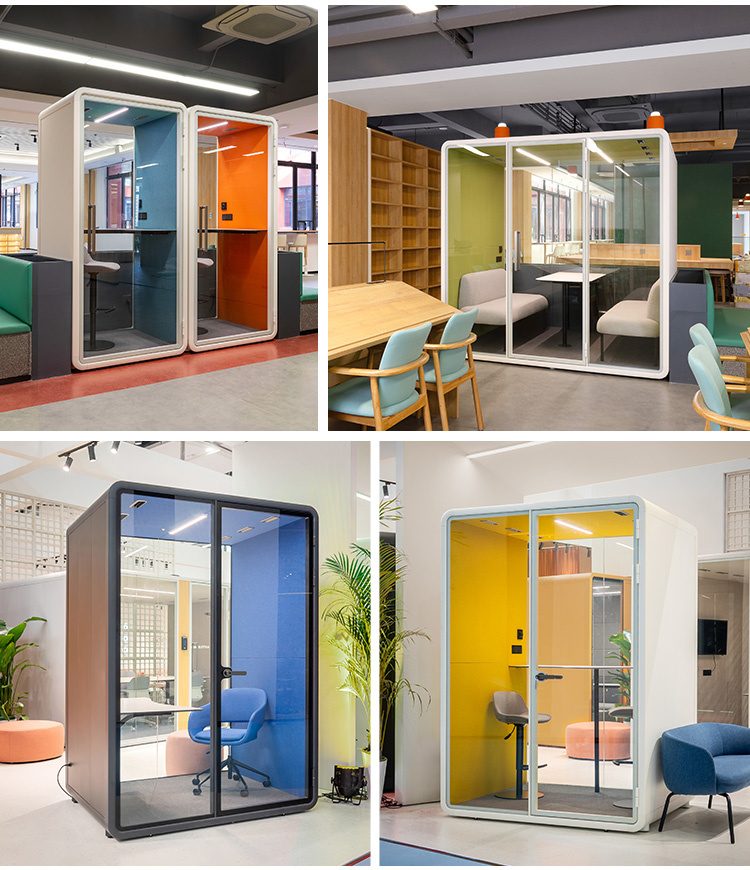
Take our single booth apart and you’re looking at a short list of materials. Aluminium frames, formed and anodised in extrusion plants around Dali town, about twenty minutes from us — the same cluster that supplies a large part of the country’s aluminium. Panel boards and the decorative finishes come from the ceramics and panel industry to the south, in Nanzhuang and Shiwan, which is where Foshan’s reputation originally came from. The glass is laminated by processors in the province, working from float glass made in the Delta. Then rock wool, felt, the gaskets, the hardware, the LEDs, the sockets.
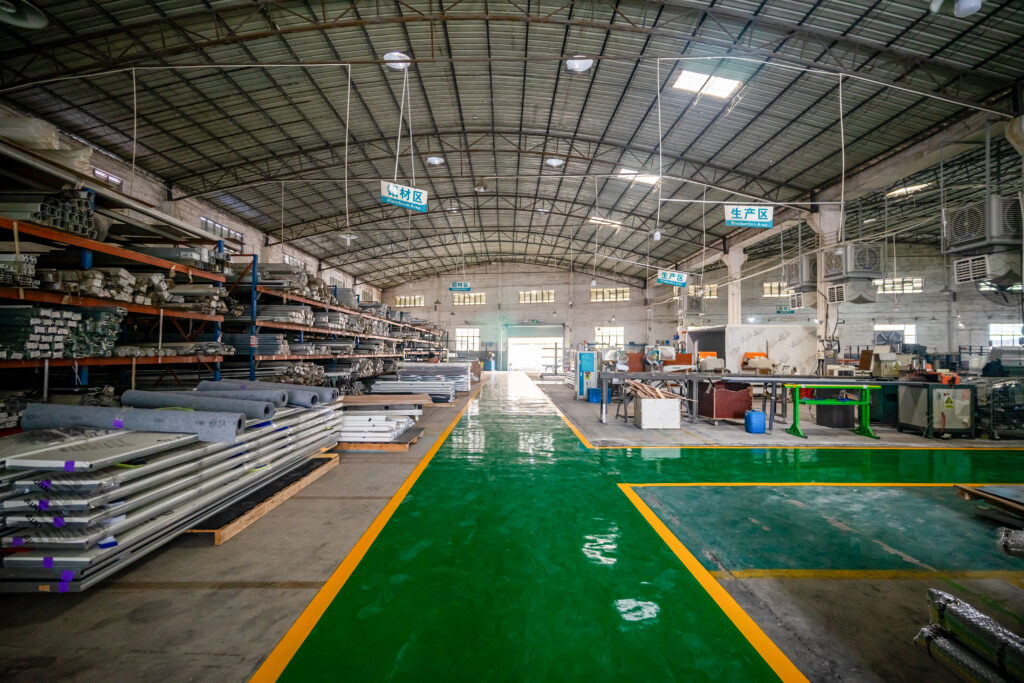
Every one of those is a factory, not a distributor, and every one of them is reachable in under an hour. The desks and stools that go inside come from Longjiang, next door, which is where most of the country’s furniture is actually manufactured. Lecong, twenty minutes the other way, is where it’s all sold — you may have heard of that one even if you’ve never been to Guangdong.
None of this is a secret. It’s just that “made in China” tells you very little, and where in China is the part that matters.
How it ends up in the price
The biggest one isn’t mysterious. A lot of what’s sold internationally as an office pod is exported by trading companies. They buy from factories like us, add their margin, sometimes change the badge, and you pay for that layer plus their office, their exhibitions and their account managers. We’d rather you didn’t, for obvious reasons.
The second one is arithmetic rather than cleverness. Rock wool that has to travel a thousand kilometres before it’s cut carries that trip in its price, and so does glass, and so does aluminium. Ours moves across town.
And the third, which I didn’t appreciate until we’d been running a few years: distance decides what you’re allowed to be fussy about. When the supplier is forty minutes away I can reject a batch of panels for a bow I can feel with my hand, send them back, and lose three days. When the same supplier is on the other side of the world and the order arrives by sea, you accept it and hope. This is the one that shows up in year four rather than in the quote, when the door is still closing properly and the frame hasn’t started to weep.
What it doesn’t get you
We have no showroom in your city and no brand recognition with your procurement team. For some buyers that’s disqualifying, and I understand it — if the choice has to be defended in a meeting, a known logo is easier to defend. Buy the logo if that’s the requirement. But you should know you’re paying for it, and a good part of what you’re paying for is the logo.
We also aren’t the cheapest thing on Alibaba, and we don’t try to be. If a price looks impossible, someone has taken 20mm out of the wall or put foam where rock wool should be, and eventually you’ll hear it, or rather you won’t hear anything, which is the problem.
Four things to ask, whoever you buy from
What’s inside the panels. Ours have 50mm rock wool. If the answer is “acoustic material” and no number, keep asking.
Whether the door has compressed gaskets and whether the vent is baffled. A straight pipe out of the ceiling is where cheap pods fail, and it’s invisible in every photo.
How many layers of glass, and whether it’s laminated. Ask the question in that exact form, because “acoustic glass” has been used to describe single panes more than once.
And the test report. Not the number on the page, the report. The suppliers who have one will send it without being asked twice.
Numbers, for anyone who wants them
| Models | Single booth, quiet reading pod, focus office pod, single voice recording booth, online class study pod. Two and four person on request. |
| Materials | 50mm rock wool panels, double laminated acoustic glass, aluminium frame, compressed gaskets, baffled vent — sourced within the Foshan area |
| Reduction | Up to about 30 dB. Test reports on request. |
| Interior | Acoustic felt, melamine, wood veneer. Fixed or height-adjustable desk. |
| Electrical | Sockets, USB, cable routing. ETL/UL-certified option for North America. |
| Warranty | Three years, structure and electrics. |
| Order size | One unit upward. OEM and white-label welcome. |
| Timing | 15–25 days production, then sea freight, usually another 25–35 depending on the port. |
Ask us for the price and the tests
Tell me which of the four jobs matters most — reading, focused work, recording, or online classes — and how many people need space. You’ll get a recommendation, pricing, and the acoustic test reports back. Usually the same day.
📧 Email: [fslaryu@gmail.com] | 📱 WhatsApp: [+8617324116489] | 🏭 Foshan, Guangdong, China